


A safe winter walk is about more than warm coats, muddy paws and the right route. One small detail can make a huge difference to your dog’s comfort and security: choosing the right collar.
Whether you are welcoming home a new puppy, replacing a worn everyday collar or looking for a more visible option for dark UK evenings, we are here to help. In this practical guide, we’ll explain how to measure your dog, compare popular dog collar materials and choose a style that suits both your pet and your home.
📏 Start with the right fit
The best dog collar should be secure without feeling restrictive. A collar that is too tight may rub, press against your dog’s neck or become uncomfortable during walks, while one that is too loose can slip over the head or catch on a leg.
How to measure your dog’s neck
- Use a soft tape measure around the middle of your dog’s neck, where the collar will sit.
- Keep the tape measure comfortably close to the coat, but do not pull it tight.
- Compare the measurement with the product’s size guide.
- Once fitted, use the two-finger rule: you should be able to slide two fingers comfortably between the collar and your dog’s neck.
- Check the collar again after grooming, weight changes and during puppy growth.
The two fingers should fit edge-on rather than lying flat. You should also be able to turn the collar gently without it digging into the skin.
Quick check: Look for redness, hair loss, rubbing, frayed stitching or signs that your dog is trying to scratch at the collar.
Neck measurement or chest measurement?
Use your dog’s neck measurement for a collar. A harness is different: it usually needs to be measured around your dog’s chest, behind the front legs and across the widest part of the ribcage.
This distinction is especially important for small dogs and puppies. For example, the Grey Star Puppy Harness and Mixed Star Puppy Harness are designed for an adjustable XS chest measurement of 30–46cm.
🧵 Dog collar types explained
Different materials offer different benefits. The right choice depends on your dog’s size, daily routine, coat, walking habits and personal style.
Tweed collars: classic and comfortable
Best for: Everyday walks and owners who love timeless country-inspired style.
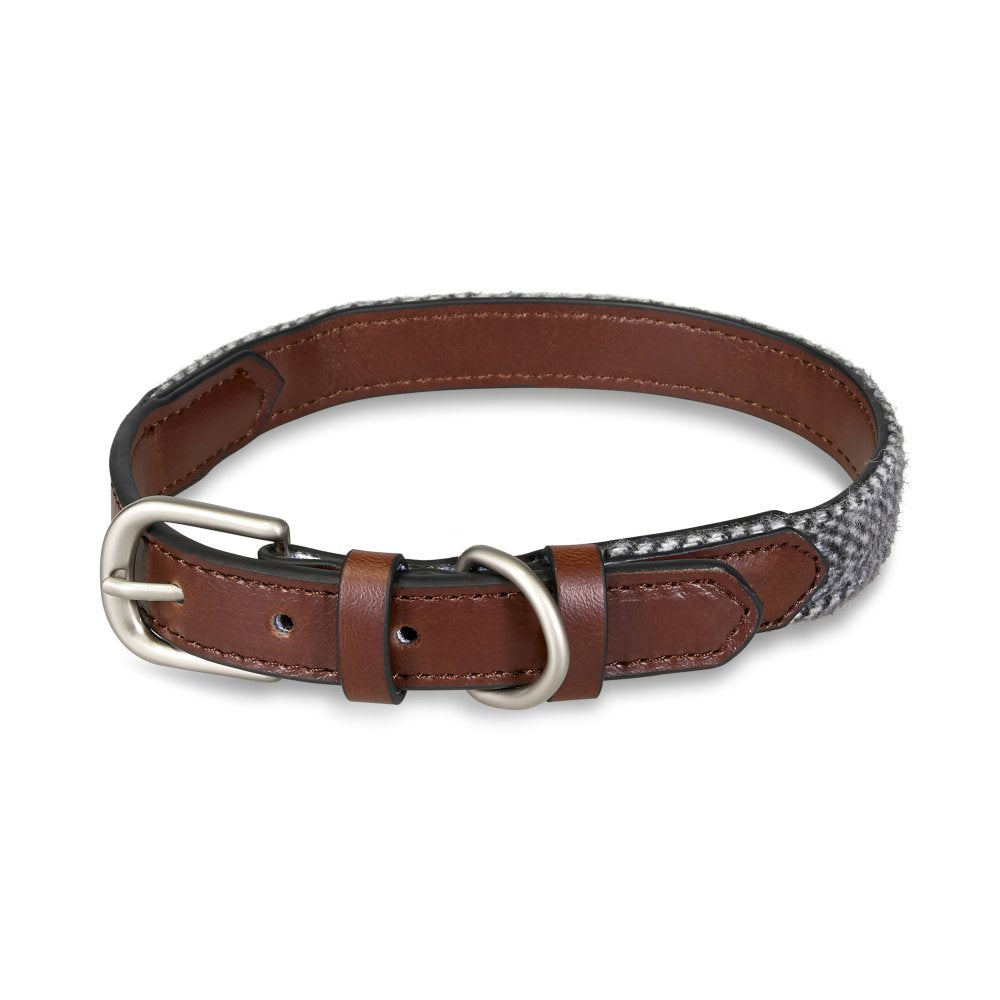
Tweed collars are a lovely choice for autumn and winter. Their warm colours and textured finish work beautifully with natural home décor, while their softer appearance makes them feel less stark than plain black accessories.
Our Grey Tweed Dog Collar is available in small, medium and large sizes. For a warmer neutral look, the Tan Tweed Dog Collars are available in three sizes too.
Benefits:
- Stylish, textured finish
- Suitable for everyday use
- Available in several sizes
- Easy to coordinate with matching leads
Leather collars: durable and refined
Best for: Dogs needing a sturdy everyday collar and owners who appreciate traditional materials.
Leather can offer a smart, durable finish when it is cared for properly. Our Herringbone Dog Collar features a powder-coated steel buckle and D-ring, with small, medium and large size options from 23cm up to 71cm.
Benefits:
- Strong buckle and D-ring
- Classic herringbone styling
- Suitable for everyday use
- A polished choice for walks and outings
Patterned fabric collars: practical personality
Best for: Dogs whose owners want comfort, colour and a little extra character.
A patterned collar can make your dog easy to recognise while adding personality to their walking kit. Our Cherry and White Dots Dog Collar is made from padded nylon, is fully adjustable and comes in three sizes.
For a softer neutral look, choose the Cream Check Dog Collar, available in small and extra-small sizes.
Benefits:
- Lightweight and comfortable
- Fully adjustable options
- Easy to spot in a busy park
- A wide choice of colours and patterns
Webbing collars: lightweight and easy to use
Best for: Active dogs, growing dogs and owners who prefer simple, practical equipment.
Webbing is commonly chosen for its lightweight feel and straightforward construction. When comparing a webbing collar, look for smooth edges, secure stitching, a reliable fastening and a lead ring that is appropriate for your dog’s size.
Always check the manufacturer’s instructions. Do not attach a lead to decorative fittings, and replace any collar that becomes ragged, torn or weakened.
🛡️ Safety essentials for UK dog owners
Buckle or quick-release?
A buckle collar is a traditional choice that stays securely fastened when fitted correctly. The Herringbone Dog Collar, for example, uses a buckle and D-ring designed for everyday security.
A quick-release collar can be easier to put on and remove, which can be particularly helpful with puppies or dogs that are still learning to accept walking equipment. Our Grey Star Puppy Collar and Lead and Mixed Star Puppy Collar and Lead sets feature quick-release clips and adjustable collars from 15–22cm.
Whatever fastening you choose, inspect it regularly for cracks, stiffness or damage.
ID tags are a legal requirement
In the UK, dogs in public places generally need to wear a collar with their owner’s name and address on the collar itself or on a tag attached to it. Your address should include the postcode. A telephone number is not usually compulsory, but it is highly recommended because it may help you and your dog be reunited more quickly.
Microchipping is also important, but it does not replace the collar and tag requirement. Add an up-to-date mobile number and remember to update your details if you move home.
You can read further information from Blue Cross on UK dog laws and your local council. Some limited exemptions may apply to certain working dogs, so check the relevant guidance for your circumstances.
Visibility for dark UK evenings
Autumn and winter bring wet pavements, poor visibility and earlier sunsets. A reflective or light-coloured collar, lead, harness or attachment can help your dog be seen when headlights or other light sources shine towards them.
Reflective material is not a substitute for a lead or supervision near roads, but it can add a useful layer of visibility. Check reflective items regularly for dirt, wet-weather damage and secure fastenings.
Our Silver Reflective Cat Collar demonstrates how reflective material can improve visibility in the dark. For dogs, choose suitable visibility equipment designed for their size and walking routine.
🐾 Choosing a collar for your puppy
Puppies grow quickly, so a collar that fits today may become too tight surprisingly soon. Check the two-finger gap several times a week, particularly after meals, growth spurts and grooming.
A lightweight puppy set can make early training simpler. Both the Grey Star Puppy Collar and Lead and Mixed Star Puppy Collar and Lead include an adjustable 15–22cm collar and 106cm lead.
For puppies or toy breeds prone to pulling, a properly fitted harness may be more comfortable than attaching the lead to a small neck. Remember that a harness does not remove the need for a collar and ID tag when your dog is in public.
Introduce new equipment gradually with praise and treats. Supervise your puppy while they are getting used to their collar, and remove it if you notice discomfort or persistent scratching.
🐱 A quick note about cat collars
Cats need different safety features from dogs. Choose a breakaway or safety-release collar that opens if it becomes caught on a branch, fence or other object. The collar should still allow two fingers between the collar and your cat’s neck, and you should check the fit frequently.
A bell may help you locate your cat and can offer some protection to wildlife, while reflective material can improve visibility in headlights. The Silver Reflective Cat Collar includes reflective qualities, a bell and a snap-open safety design.
For a decorative option, our Brown Diamante Cat Collar and Plum Crown Cat Collar both include safety-release features. Never use a collar that cannot release safely if snagged.
🧼 Collar care and cleaning guide
Wet walks and muddy paths are part of life with a dog, but moisture and grit can shorten the life of walking equipment.
After a muddy or wet walk
- Wipe away mud and dirt as soon as possible.
- Allow collars and leads to dry naturally before storing them.
- Check buckles, clips, stitching and D-rings.
- Look for rust, fraying, cracks or weakened areas.
- Do not use a damaged collar, even if the damage appears minor.
Some products are wipe clean only, including the Cream Check Dog Collar and Lead. Follow the product instructions rather than soaking materials or using strong household cleaners. If a collar becomes ragged or torn, replace it.
🎨 Matching your dog collar and lead
A matching dog collar and lead creates a coordinated look, but it can also make your daily routine feel more organised. We have practical and stylish combinations to suit different personalities:
- Classic: Pair the Herringbone Dog Collar with the Brown Leather Dog Lead.
- Country style: Match the Grey Tweed Dog Collar with the Grey Check Dog Lead, or choose the Tan Tweed Dog Collar with the Tan Tweed Dog Lead.
- Neutral and smart: Coordinate the Cream Check Dog Collar with the Cream Check Dog Lead.
- Fun and colourful: Pair the Cherry and White Dots Dog Collar with its matching Cherry and White Dots Dog Lead.
You can browse our full Collars & Leads collection for more walking essentials. Our Dog Walk Bum Bag is another useful companion, with waterproof fabric, multiple compartments and hands-free storage for keys, phone and poo bags.
For more practical walking advice, visit our related pet-care guides.
🏡 Make the walk-home routine cosy
After a cold, wet walk, your dog will often be ready for a warm drink of water and a comfortable place to settle. Our pet comforters and blankets pair beautifully with pet beds for a cosy walk-home routine, whether your dog curls up on the sofa or relaxes in their favourite bed.
Choosing the right dog collar UK owners can rely on is a small purchase, but it is also a meaningful act of care. With the right fit, secure fastening, visible details and regular checks, you can help your dog enjoy safer, more comfortable walks throughout the seasons.
0 comments