


Meta description: Choosing a dog lead for autumn and winter? Compare fixed, retractable and long-line leads, with practical advice for puppies, busy pavements and safer UK evening walks.
The big decision on a dark evening walk might seem to be which route to take. But the small detail that can make a real difference is the dog lead in your hand: its length, how securely it clips on and how much control it gives you when a car, cyclist or curious dog appears.
For many everyday walks, a simple fixed-length lead is a reassuring choice. Here’s how the main types compare, what to consider for your dog and how to match a lead to a collar, especially if you’re choosing dog leads in the UK for the darker months.
🌙 First, think about where you walk
A lead that works well in a quiet field may be awkward on a narrow pavement. Before choosing one, consider where your dog spends most of their walking time:
- Busy streets and pavements: prioritise close control and easy handling.
- Quiet parks: a standard lead is handy for walking; recall practice may call for a different setup.
- Open spaces: a long line can allow more exploration while you practise recall, provided you can handle it safely.
- Evening walks: visibility matters as well as lead length. Consider a light-coloured or reflective layer or a light for you and your dog; don’t assume a patterned lead is reflective unless its product details say so.
The Highway Code advises keeping your dog on a short lead on pavements, roads and paths shared with cyclists or horse riders. Local rules can also vary, so check signs and council guidance in the places you visit.
🐕 Lead types compared: flat, retractable and long line
| Lead type | Most useful for | Things to consider |
|---|---|---|
| Fixed-length flat lead | Everyday walks, pavements, crossings and close control | Offers a consistent length; choose one you can grip comfortably and that suits your dog’s size. |
| Retractable lead | Some spacious, low-traffic settings with an experienced handler | The extra line can make close control harder. It may be unsuitable around roads, crowds and during early lead training. |
| Long line | Recall practice and controlled exploration in open areas | Needs active handling and plenty of space; trailing line can tangle or trip people and pets. |
✅ When a fixed-length lead is a safer everyday choice
On a pavement or near traffic, a fixed lead helps you keep your dog close without managing a spool of extra line. That can be useful when you need to pass another dog, wait at a crossing or move around a pram or parked car. PDSA also advises using a short lead near roads rather than an extender lead, because it gives you more control if your dog suddenly darts.
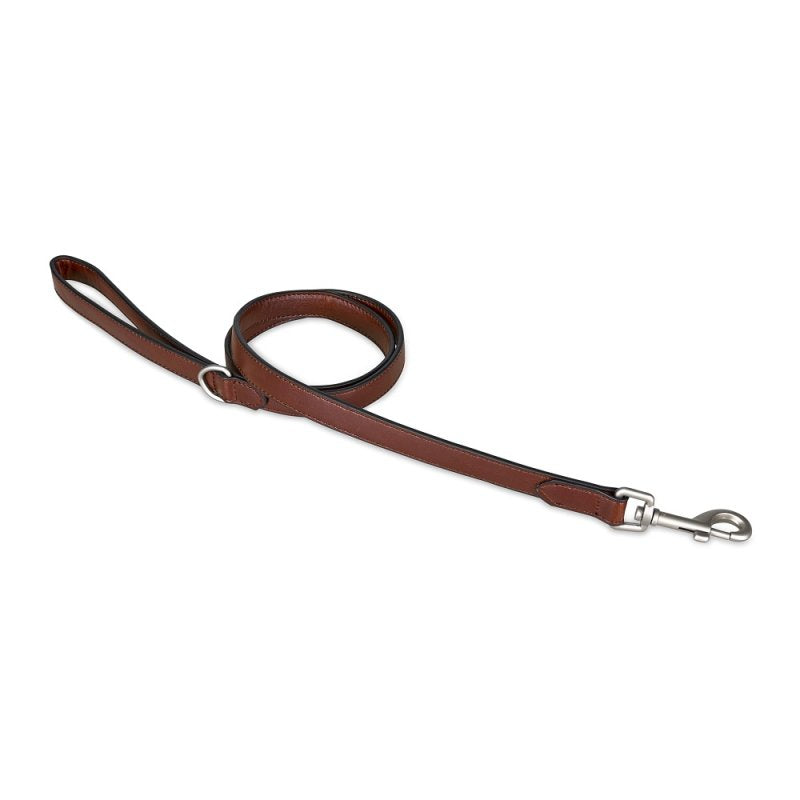
Our Brown Leather Dog Lead is a fixed-length option listed as 120 cm long and 2 cm wide. It has a powder-coated clip and D-ring, and is priced at £10.49.
⚠️ What to know about retractable leads
A retractable dog lead can extend a dog’s range, but more length isn’t always helpful. The line can make it harder to bring your dog close quickly, and may be difficult for other people to see. That’s why we’d choose a fixed-length lead for everyday pavement walks, crossings and crowded paths. Particularly if your dog is still learning to walk calmly.
Retractable leads also aren’t a shortcut to recall. If you do use one in a spacious, low-risk place, stay alert, keep your dog at a sensible distance and check the equipment before each walk.
🌿 When a long line can help with recall
A long dog lead or training line can give your dog room to explore while you practise coming back when called. Battersea recommends attaching a long line to a harness rather than a collar, and learning how to manage the slack with both hands. Use it in a suitable open area, keep an eye on what’s around you and shorten it well before passing other people or dogs.
Long lines need room and practice to handle safely. We don’t currently stock retractable leads or long lines, so our Collars & Leads collection focuses on fixed-length options for everyday use.
🌧️ Choosing a lead for dark autumn and winter walks
Shorter days bring dim pavements, wet leaves and more walks after sunset. A fixed lead can help you keep your dog close, but it won’t make either of you visible by itself.
Before heading out, check that:
- Your dog’s lead and collar or harness are in good condition, with no fraying or damaged clips.
- You can grip the lead securely, even in gloves.
- Your dog is close to you near roads and crossings.
- You have a torch or other light source, and consider reflective or illuminated gear for both of you.
- Your route is well lit where possible, with safe places to cross.
PDSA recommends making sure you and your dog can be seen when it’s dark or visibility is poor. A reflective dog lead is one option if you have one, but reflective clothing or a suitable light can also help. Check product details carefully: our patterned leads are not described as reflective.
🔗 Match the lead to your dog’s collar
A good match is about more than colour. Check that the lead’s clip fits the collar’s attachment ring securely, and choose a lead width and construction that feel appropriate for your dog’s size and strength. Inspect the clip and stitching regularly, especially if your dog pulls or your walks often take you through wet, muddy places.
For an easy coordinated look, consider matching designs:
- Brown leather: Brown Leather Dog Lead with the Herringbone Dog Collar.
- Tweed tones: Tan Tweed Dog Lead with Tan Tweed Dog Collars.
- Checks: try the Grey Check Dog Lead with the Grey Tweed Dog Collar, or the Cream Check Dog Lead with the Cream Check Dog Collar.
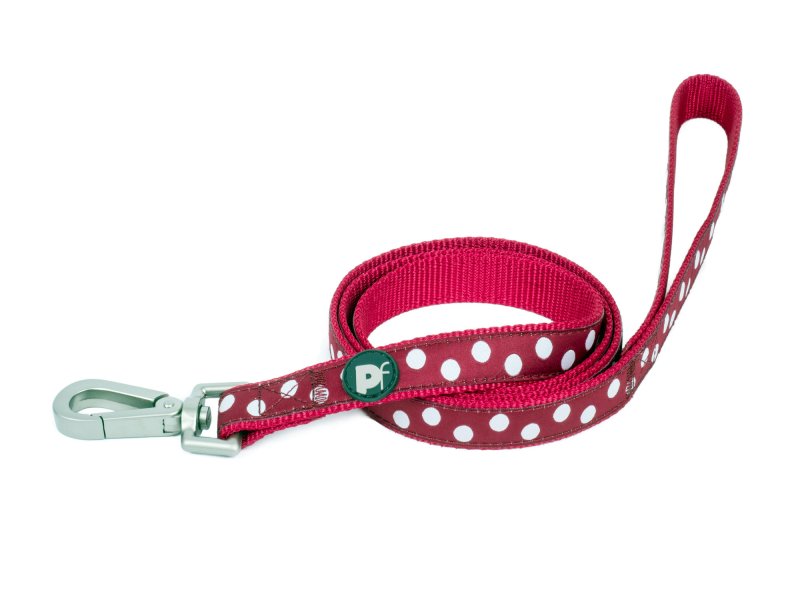
- A cheerful pop of colour: pair the Cherry and White Dots Dog Lead with the matching collar.
The Grey Check Dog Lead is available in small and medium widths and is listed as 120 cm long. The Cherry and White Dots Dog Lead is also listed at 120 cm; its padded handle is designed to make it more comfortable to hold.
🐾 Puppy lead advice: keep the first steps simple
For a puppy, the first goal is helping them feel comfortable with their walking gear, not covering a long distance. Let them investigate the lead indoors, reward calm behaviour and practise in a quiet, familiar space before adding busier surroundings. Keep early sessions short and positive.
A fixed-length lead gives you a consistent connection while you practise walking together. Reward your puppy when they stay near you or when the lead is loose; if they pull, pause and give them a chance to return rather than pulling them along.
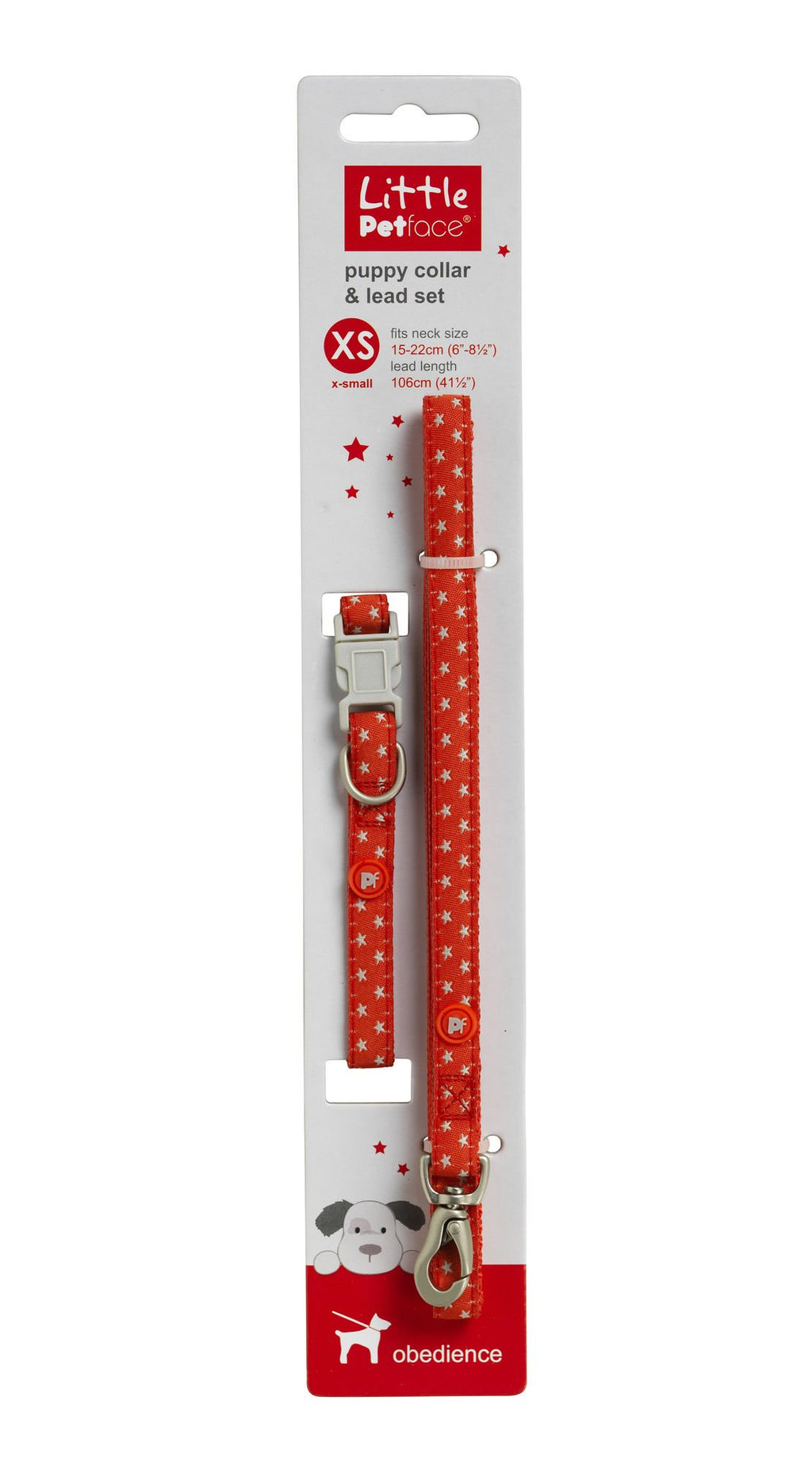
For a small puppy, our Grey Star Puppy Collar and Lead and Mixed Star Puppy Collar and Lead are each £6.49. Both sets are described as suitable for puppies and small toy breeds, with a 106 cm lead and an adjustable collar measuring 15–22 cm. The product guidance recommends leaving room for two fingers between the collar and your puppy’s neck; check the fit as they grow.
If your puppy pulls or you’re considering a harness, the Grey Star Puppy Harness is listed as adjustable for a 30–46 cm chest. Measure your puppy and check the fit before heading out. A harness can be helpful for some dogs, but it doesn’t replace calm, reward-based lead training.
✅ Quick pre-walk check
Before setting off, take a moment to check:
- Fit: the collar or harness is comfortable and secure.
- Connection: the clip is fully attached to the correct ring.
- Condition: the lead, stitching and hardware are sound.
- Visibility: you and your dog can be seen in poor light.
- Route: the lead length suits the pavements, crossings and shared paths ahead.
A well-chosen dog lead is a small piece of kit that can make everyday walks feel more comfortable and manageable, for you and your dog. For busy streets and darker evenings, a fixed-length lead is a practical place to start; for recall practice, use a long line only in a suitable space and with careful handling. Choose something that fits your dog, check it often and enjoy those walks together, whatever the season.
0 comments