


When we think about keeping our cats healthy through autumn, we often focus on food, vet checks and avoiding dangerous roads. But one small detail can make a surprisingly big difference to their comfort: where they sleep when the weather turns wet, windy and cold.
A well-prepared outdoor cat house gives your feline friend a dry place to retreat, watch the garden and curl up between adventures. With a little seasonal preparation, you can help make their outdoor space warmer, safer and much more inviting throughout the changeable UK autumn. 🐾
🍂 1. Start with the right outdoor cat house
Before adding blankets or insulation, check that the house itself is suitable for autumn conditions. The best designs help keep rain, wind and ground dampness away from your cat while still allowing easy access.
Look for:
- A raised floor to reduce contact with cold, wet ground
- A sloping or asphalt-covered roof so rainwater runs away
- Solid construction with no sharp edges, gaps or loose fixings
- A manageable entrance that reduces draughts without making your cat feel trapped
- Enough room to turn around and stretch, but not so much space that body heat is quickly lost
- Safe access points that allow your cat to leave easily if they feel threatened
For example, the 2 Tier Flower Pot Outdoor Cat House has a raised wooden structure and slanted asphalt roof designed to help protect the interior from damp. Its two levels also give your cat options for relaxing and observing their surroundings.
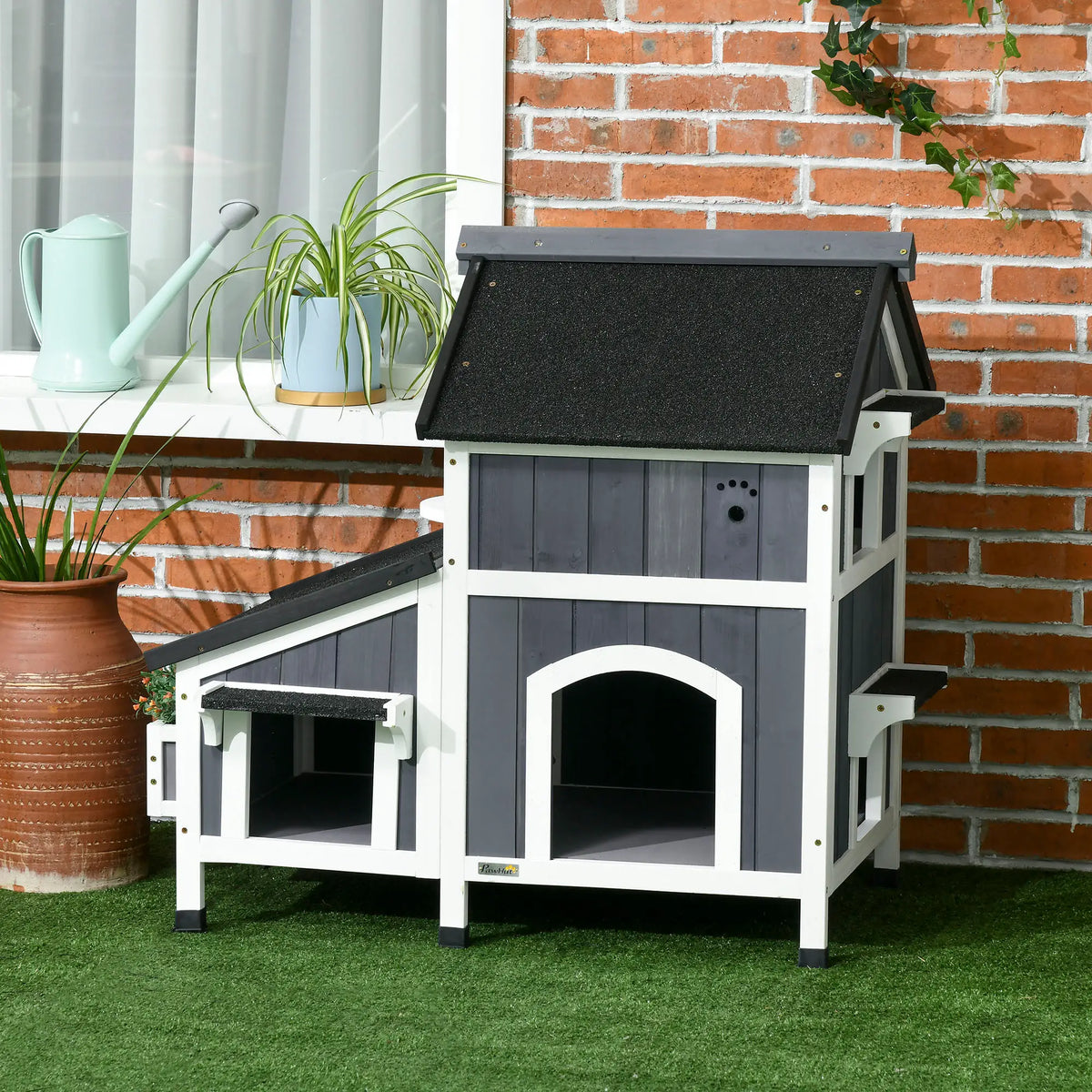
🏠 Type and benefit guide
| Outdoor cat house feature | Why it helps in autumn |
|---|---|
| Raised base | Helps reduce cold and moisture rising from patios, soil or grass |
| Weather-resistant roof | Directs rain away from sleeping areas |
| Multiple access points | Gives your cat greater confidence and an escape route |
| Two levels | Creates separate areas for resting, climbing and watching the garden |
| Removable or accessible panels | Makes cleaning and seasonal checks easier |
The 2 Floor Outdoor Cat House is another practical option, with a fir wood body, asphalt roof, multiple access points and two internal levels. Always check the product’s dimensions and maximum load before choosing a house for your cat.
🧱 2. Improve insulation without creating hazards
A wooden shelter provides a useful barrier against the weather, but simple improvements can make it more comfortable as temperatures drop.
Practical insulation ideas
- Place the house on paving slabs, sturdy feet or a raised platform rather than directly on grass.
- Add insulation beneath the floor where possible, ensuring it is fully enclosed and cannot be chewed.
- Use a removable, weather-resistant outer cover over exposed sides if the house is in an especially windy position.
- Check the roof and wall joints for small gaps where rain could enter.
- Add a flexible door flap or thick outdoor curtain to reduce draughts.
If you are adding foam board, foil insulation or another lining, make sure it is securely covered. Exposed insulation can be dangerous if your cat scratches, bites or pulls it loose. Avoid tape, staples or fixings that could become accessible.
You should also avoid sealing the shelter completely. A warm house still needs a small amount of airflow to prevent condensation, damp bedding and stale air.
🛏️ 3. Choose bedding for the conditions
The right bedding depends on how exposed the outdoor cat house is and whether your cat comes indoors regularly.
For a sheltered, covered house
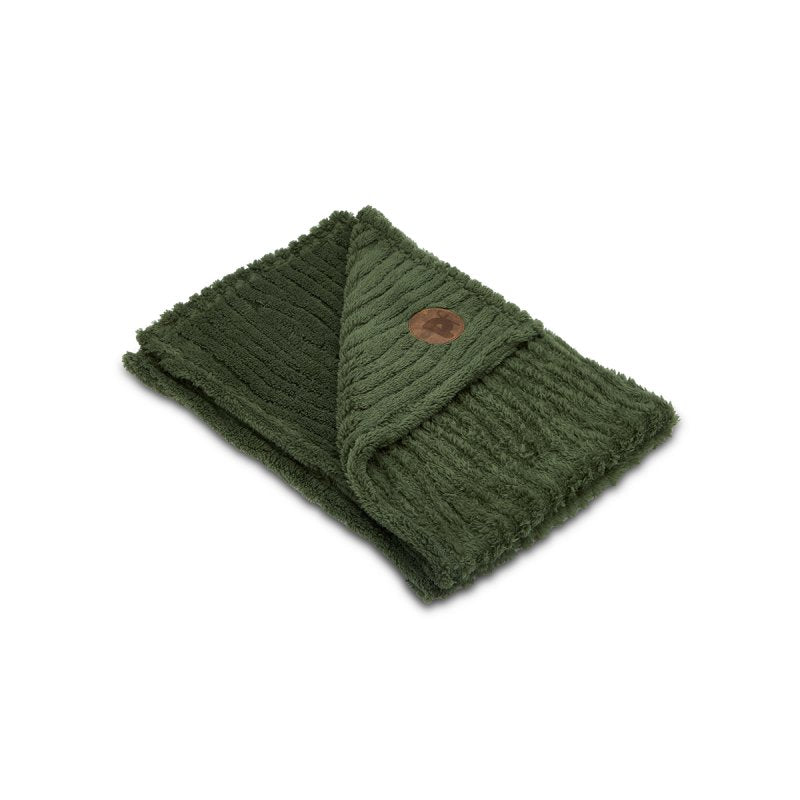
A washable cat comforter or blanket can add softness and familiar scent. Our Pet Comforters & Blankets collection includes cosy options in autumn-friendly colours and textures.
The Green Textured Fleece Pet Comforter Blanket or Moss Green Pet Comforter Blanket can be useful in a dry, protected shelter or on a covered porch.
For an exposed outdoor shelter
In damp UK weather, loose straw is usually more suitable than towels, duvets or thick fabric bedding. Straw allows a cat to burrow and helps trap warm air without holding as much moisture as fabric.
Avoid hay, which can become damp and mouldy. Whichever bedding you use, check it often and remove anything that feels wet, smells musty or shows signs of mould.
Quick bedding guide
- Dry, covered shelter: washable blanket or comforter
- Exposed shelter: clean, dry straw
- Very wet weather: extra straw and more frequent checks
- Any damp fabric: remove and replace immediately
- Senior or arthritic cat: add a soft, supportive layer while keeping it dry
A blanket is only helpful while it is dry. Once damp, it can draw heat away from your cat rather than keeping them cosy.
📍 4. Position your outdoor cat house carefully
Good positioning is one of the easiest ways to improve warmth without adding extra equipment.
The best autumn location
Place the house:
- Against a wall, fence, hedge or sturdy shed to create a windbreak
- Beneath a balcony, roof overhang or dense shrub for extra rain protection
- On a level, raised surface that will not wobble
- Away from busy paths, barking dogs and areas where your cat may feel exposed
- Close enough to your home for regular checks, but not directly beside a noisy door
In many parts of the UK, south-westerly winds bring wet weather, so try to face the entrance away from the prevailing wind. If possible, position the doorway towards a wall or sheltered corner rather than an open lawn.
Do not place the house in a dip where rainwater collects. Autumn leaves can also block entrances and ventilation points, so clear them away after windy weather.
🌧️ 5. Weatherproof the shelter while keeping it ventilated
A dry house is a warm house. During autumn, inspect the roof, seams and base regularly, particularly after heavy rain.
Weatherproofing checklist
- Roof: check for cracks, lifting edges or pooled water
- Walls: look for damp patches, soft wood or damaged paint
- Base: confirm that the house is still raised and stable
- Entrance: ensure any flap moves freely and is not stuck
- Drainage: make sure rainwater runs away from the shelter
- Ventilation: keep small upper vents clear of leaves and debris
Ventilation matters because your cat’s breath and body heat create moisture inside the shelter. Small openings near the roofline can allow humid air to escape without creating a strong draught at floor level.
Avoid covering ventilation holes with plastic sheeting. If you use a waterproof cover, secure it around the outside while leaving deliberate air gaps clear.
🧼 6. Follow a simple autumn maintenance routine
Your cat may not tell you that their house is damp, so regular checks are essential.
Weekly check
- Feel the bedding to make sure it is completely dry.
- Look for condensation on the walls or roof.
- Remove leaves, mud and cobwebs from the entrance.
- Check the house has not shifted, tipped or become unstable.
- Look for damaged wood, loose screws or sharp edges.
After heavy rain or strong winds
- Inspect the roof and door flap.
- Check underneath the house for standing water.
- Replace damp straw or fabric bedding.
- Make sure the entrance is not blocked.
- Confirm that any outer cover is still secure.
Use a pet-safe cleaning product when needed and allow the interior to dry fully before replacing the bedding. Avoid strong fragrances, as cats can be sensitive to unfamiliar scents.
⚠️ 7. Keep autumn hazards away from the shelter
A cosy outdoor cat house should also be a safe one.
- Do not use candles, open flames, hot water bottles or indoor heaters inside the house.
- Only consider a heat pad if it is specifically designed for outdoor pets, with suitable protection from chewing and moisture.
- Keep cables away from entrances, standing water and places where your cat could pull or chew them.
- Never leave antifreeze, de-icer or other garden chemicals near the shelter.
- Make sure the house cannot be reached easily by a larger animal that could block the entrance.
- Check that your cat can leave quickly rather than being enclosed in a single-entry box.
If your cat is young, elderly, unwell, very thin or short-haired, they may become cold more quickly than a healthy adult cat with a thick coat.
🏡 When should your cat come indoors?
An outdoor cat house is a useful retreat, but it should not be treated as a replacement for bringing a pet cat indoors during severe weather.
Bring your cat inside when there are:
- Storm warnings or very strong winds
- Persistent heavy rain
- Frost, ice or freezing conditions
- Flooding or waterlogged ground
- Snow or unusually low temperatures
- Long periods of darkness or poor visibility
- Any signs that your cat is struggling to stay warm
You should also bring them in if they seem reluctant to go outside, are shivering, have cold ears or paws, appear unusually quiet, or return wet and lethargic. Dry them gently, warm them gradually and contact your vet if you are concerned.
Cats who are genuinely feral or cannot safely be brought indoors will need more frequent checks, extra dry bedding and a fully weatherproof shelter. Even then, monitor the forecast and make changes before bad weather arrives rather than waiting until the house is already cold and wet.
✅ Your autumn outdoor cat house checklist
Before the season gets properly chilly, check that:
- The house is raised off the ground
- The entrance faces away from the prevailing wind
- The roof is intact and sheds rain
- Bedding is dry, clean and suitable for the shelter
- Insulation is covered and inaccessible to chewing
- Ventilation points are clear
- The structure is stable and free from sharp edges
- You can inspect it easily every day
- Your cat has access to a warm indoor space during severe weather
❤️ Small changes, meaningful comfort
Preparing an outdoor cat house for autumn does not need to be complicated. Raising it off the ground, keeping the bedding dry, blocking direct wind and checking it regularly can make a meaningful difference to your cat’s comfort.
Whether you choose a compact 2 Floor Outdoor Cat House, a spacious 2 Tier Flower Pot Outdoor Cat House, or add a soft layer from our cat comforters and blankets, each thoughtful detail says the same thing: your cat’s wellbeing matters.
At All Creatures, Crates & All, we believe the smallest purchases and preparations can be some of the biggest acts of love. 🐈🍁
0 comments