


Keeping your dog healthy involves the big things: balanced food, regular exercise and routine veterinary care. But one small detail can make a surprising difference every day: choosing the right dog bowls for food and water.
The best bowl should suit your dog’s size, eating style and needs, while being easy for you to clean. At All Creatures, Crates & All, we believe practical pet essentials should also feel at home in your kitchen, which is why we’ve put together this friendly UK guide to choosing the right food and water bowls for your dog. 🐾
🐶 Quick answer: what are the best dog bowls?
For most dogs, a stainless steel or ceramic dog bowl is a reliable everyday choice.
- Stainless steel dog bowls are durable, lightweight and easy to clean.
- Ceramic dog bowls are heavier and often less likely to slide across the floor.
- Slow feeder bowls can be useful for dogs that eat too quickly.
- Elevated bowls may be more comfortable for some older or larger dogs, although you should ask your vet for advice if your dog is at risk of bloat.
- Collapsible travel bowls are handy for walks, holidays and days out.
The right choice depends on your individual dog: not simply their breed or appearance.
🧭 How to choose the right dog bowls
Before choosing a bowl, think about these four questions:
- How big is your dog?
- Do they eat calmly or gulp their food?
- Do they push, tip or carry their bowl?
- Where will the bowl be used?
A bowl that works beautifully for a calm Cocker Spaniel may not be suitable for a fast-eating Labrador or a large, older Great Dane. Your dog’s comfort and behaviour at mealtimes are the best starting points.
You may also want separate bowls for food and water. This makes it easier to keep one bowl available for fresh water while the other is being washed.
🥣 Dog bowl materials compared
🩶 Stainless steel dog bowls
Stainless steel is one of the most practical materials for everyday dog bowls. It is hard-wearing, generally non-porous and easy to wash, making it a particularly good choice for water bowls.
Pros:
- Durable and resistant to breaking
- Easy to clean
- Less likely to retain food smells
- Lightweight and convenient to move
- Suitable for food and water
Cons:
- May slide across hard floors without a non-slip base
- Can be noisy if your dog nudges it
- May not be as decorative as ceramic options
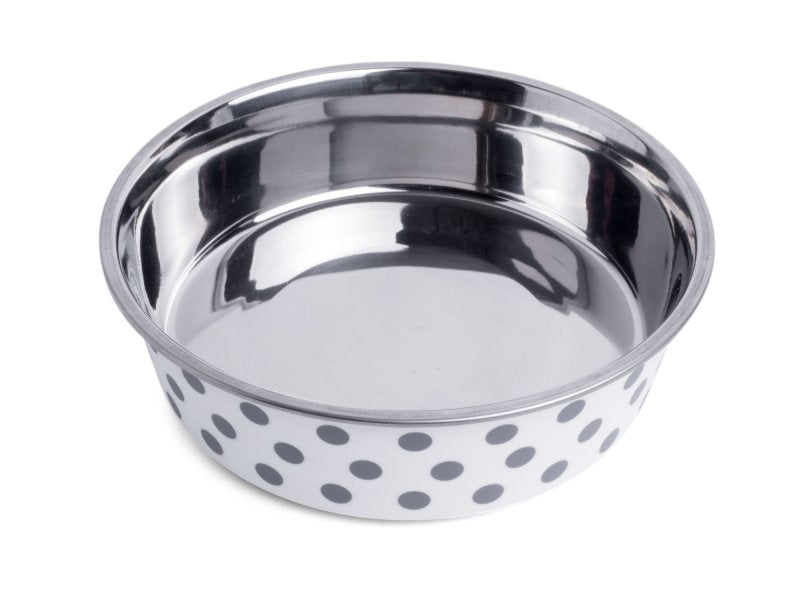
Our Deli Grey Spot Metal Bowl combines a practical metal design with a soft, spotty finish that feels more at home in a stylish kitchen.
🤍 Ceramic dog bowls
Ceramic dog bowls are a popular option for owners who want something heavier and more attractive. Their weight can help prevent sliding, which is useful for enthusiastic eaters.
Ceramic bowls should always be checked regularly for chips and cracks. Damaged surfaces can be more difficult to clean, so replace a bowl if it becomes cracked or chipped.
Pros:
- Heavy and stable
- Available in a range of attractive designs
- Easy to wipe clean when undamaged
- Can blend neatly with your home décor
Cons:
- Can break if dropped
- Chips and cracks may harbour food residue
- Usually less convenient for travel
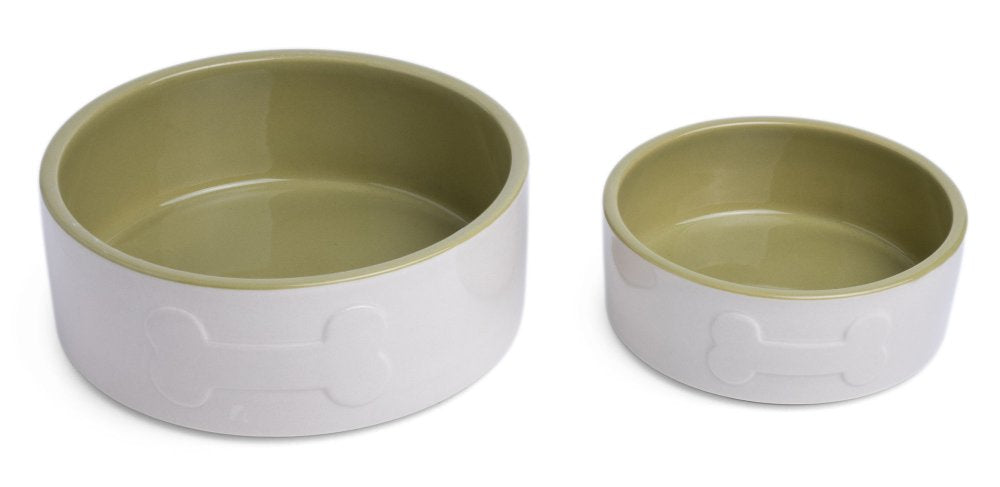
Our Bone Green Ceramic Pet Bowl adds a gentle pop of colour, while the Bone Navy Ceramic Pet Bowl offers a classic, understated look.
💙 Plastic dog bowls
Plastic bowls are lightweight and often affordable, but they need a little more care. Scratches can develop over time, and these damaged areas may be harder to clean thoroughly.
Some dogs can also develop irritation around the chin or mouth when using certain plastic bowls. If you choose plastic, inspect it regularly and replace it when scratched, chewed or worn.
Plastic can be a useful material for a slow feeder or occasional use, but we would generally choose stainless steel or ceramic for your dog’s main food and water bowls.
📏 Dog bowl sizes by breed and weight
There is no single perfect bowl size for every breed. A better approach is to choose a bowl that allows your dog to eat comfortably without needing to stretch their neck too far or push their muzzle against the sides.
Use the following as a starting point:
| Dog size | Approximate weight | Suggested bowl diameter | Suitable examples |
|---|---|---|---|
| Toy and small | Up to 10kg | 12–16cm | Chihuahua, Dachshund, Shih Tzu |
| Medium | 10–25kg | 16–20cm | Beagle, Cocker Spaniel, Border Collie |
| Large | 25–40kg | 20–25cm | Labrador, German Shepherd, Boxer |
| Giant | Over 40kg | 25–30cm or larger | Great Dane, Mastiff, Newfoundland |
These measurements are a general guide rather than a strict rule. Consider the amount of food served, your dog’s muzzle shape and whether they prefer a shallow or deeper bowl.
🐕 Muzzle shape matters
- Short-nosed dogs may find a wide, shallow bowl easier to access.
- Long-nosed dogs may prefer a narrower, deeper bowl.
- Dogs with long ears can benefit from a narrower shape that helps keep their ears out of food and water.
- Puppies need bowls that are easy to reach and large enough to remain stable as they grow.
If your puppy is still growing, check their bowl regularly and increase the size when their current bowl begins to feel cramped.
🍽️ Which type of dog bowl is best?
✅ Standard non-slip dog bowls
Standard bowls suit most dogs, particularly when they have a broad base or non-slip underside. If your dog pushes their bowl around the room, a heavier ceramic bowl or a non-slip design may help.
Our Grey Bone Bowl is a simple everyday option with a neutral design that suits a range of interiors.
🌀 Slow feeder dog bowls
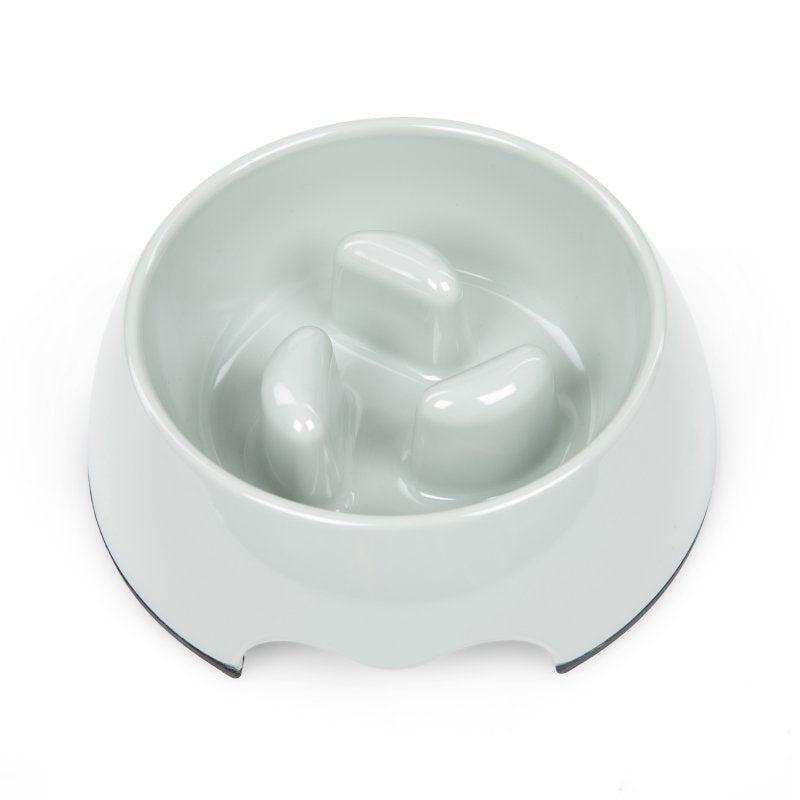
Does your dog finish dinner in seconds? A slow feeder dog bowl uses raised sections, ridges or an interactive shape to encourage slower eating.
Slowing your dog down may reduce gulping and help make mealtimes calmer. However, a slow feeder is not a medical treatment, and you should speak to your vet if your dog regularly vomits, coughs while eating or shows signs of digestive discomfort.
The Anti-Gulp Dog Bowl – small and Anti-Gulp Dog Bowl – medium are designed for dogs who need encouragement to take their time.
Slow feeder tips:
- Start with a small portion so your dog can learn the layout.
- Watch your dog the first few times they use it.
- Clean carefully around ridges and raised sections.
- Follow the product’s cleaning instructions.
- Stop using it if your dog becomes frustrated or distressed.
🪵 Elevated dog bowls
Elevated dog bowls sit on a stand, reducing how far your dog needs to bend to reach their food. They may be helpful for some older dogs or dogs with joint, neck or back discomfort.
However, elevated feeding is not right for every dog. Because advice can vary: particularly for large breeds that may be prone to bloat: we recommend speaking to your vet before introducing raised bowls for health reasons.
Choose a stand that is stable, secure and appropriate for your dog’s height. Your dog should be able to eat without stretching upwards.
🚗 Travel and collapsible dog bowls
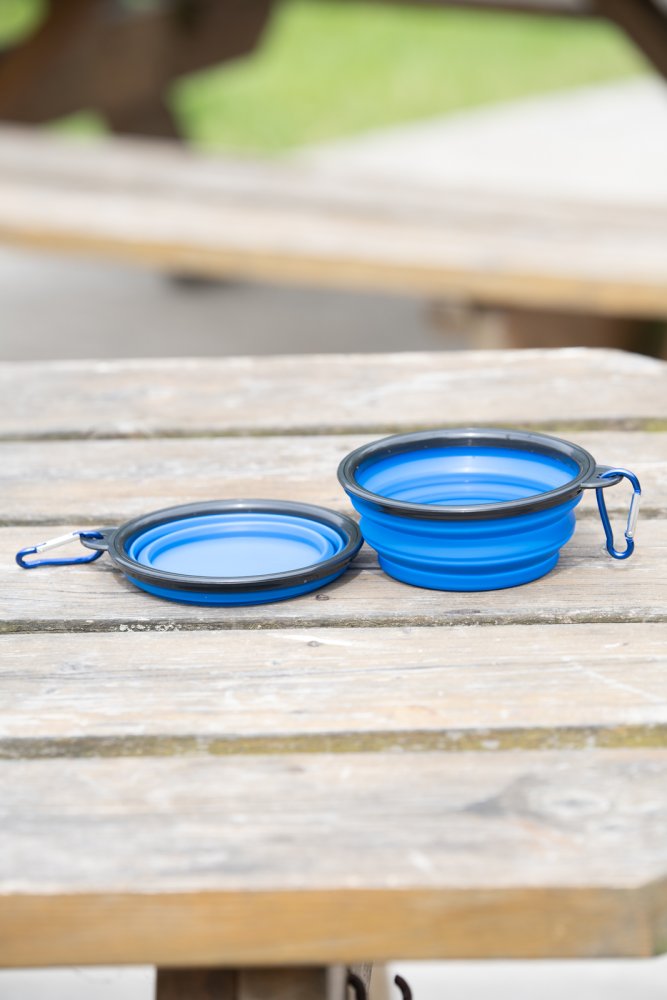
For holidays, walks and visits to the park, a portable bowl is an excellent addition to your dog-walking kit. The Collapsible Travel Dog Bowl folds down neatly when not in use and is easy to carry.
Pair it with a Dog Walk Bum Bag or Dog Treat Bag for a convenient day-out set-up.
🧼 How to clean your dog bowls properly
Good bowl hygiene is just as important as choosing the right material.
Food bowls
Wash your dog’s food bowl after every meal, especially if you serve wet food, raw food or homemade meals. Use hot water and washing-up liquid, scrub all surfaces, rinse thoroughly and allow the bowl to dry fully before refilling.
Water bowls
Refresh your dog’s water regularly and wash their water bowl at least once a day. A quick top-up is not a substitute for cleaning, as a slippery film can build up on the surface over time.
Simple cleaning checklist
- Remove leftover food promptly.
- Wash bowls separately from heavily soiled household items where possible.
- Use a brush to reach corners and slow-feeder grooves.
- Rinse away all detergent.
- Dry the bowl before adding food or water.
- Check regularly for scratches, chips, cracks or loose parts.
- Follow the manufacturer’s dishwasher guidance.
It is also sensible to keep a spare set of bowls. This means your dog can still enjoy fresh food and water while their usual bowls are being cleaned.
🏡 Where should you place your dog’s bowls?
The best feeding spot is quiet, accessible and easy to clean. Avoid placing bowls directly beside a busy doorway or in an area where your dog may feel crowded by people, children or other pets.
A washable mat can help protect your floor from splashes and crumbs. Our Rubber Placemat is shaped to accommodate two bowls, with a broad surface that can be wiped clean after mealtimes.
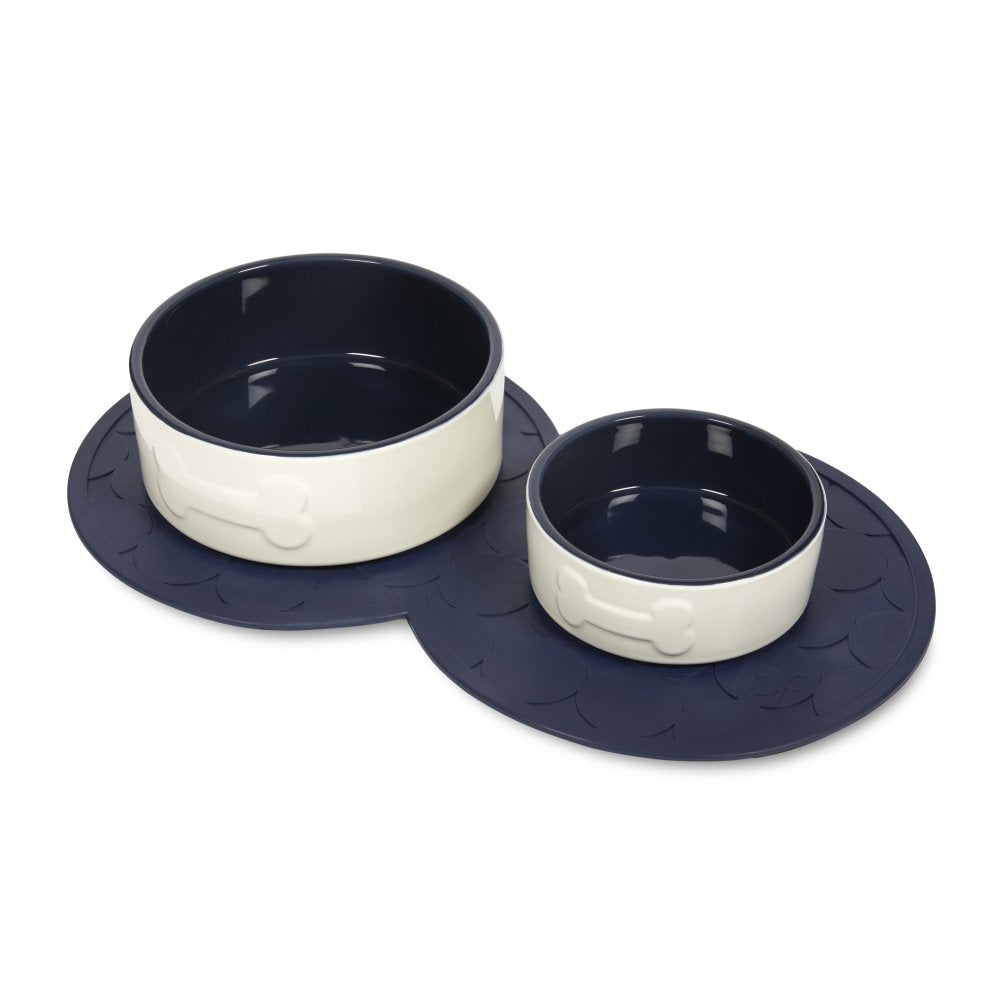
If you have more than one dog, separate feeding areas may help reduce guarding, rushing or competition. Every dog should be able to eat and drink comfortably without being disturbed.
🐾 Our final dog bowl checklist
Before buying, ask yourself:
- Is the bowl the right size for my dog?
- Is the material durable and easy to clean?
- Does my dog need help eating more slowly?
- Will the bowl stay stable on our floor?
- Is it suitable for food, water or travel?
- Can I check and clean it easily every day?
- Does it fit comfortably into our home?
Browse our Dog Bowls collection to find practical everyday bowls, ceramic designs, anti-gulp options and travel-friendly choices.
Choosing dog bowls may seem like a small decision, but it supports your pet’s comfort, routine and wellbeing every single day. Whether you select a sturdy metal bowl, a stylish ceramic design or a collapsible option for adventures, these small purchases are meaningful acts of care for a much-loved member of your family. ❤️
0 comments